
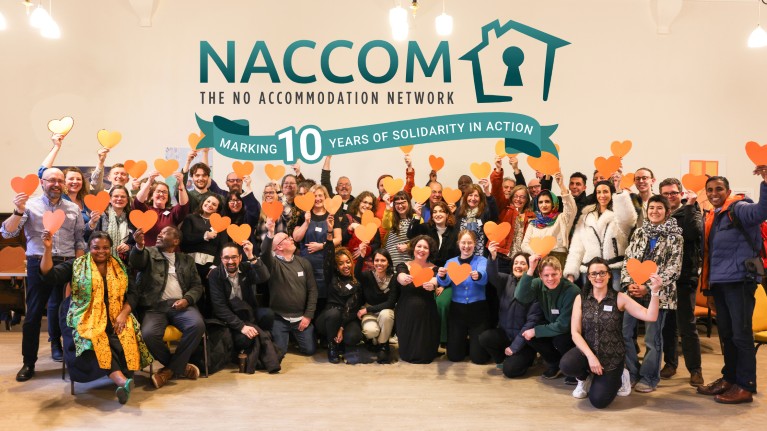
NACCOM recently published their annual survey, bridging data from more than hundred member organisations, including SJOG. Through our services that support people experiencing homelessness and/or modern-day slavery and trafficking, our contribution helped understand the scale of migrant homelessness and the vulnerabilities of refugees and those with NRPF.
The survey highlights that:
- In 2024/25, 4,434 people were accommodated—the highest number on record.
- Rough sleeping on first access rose to 829 individuals, more than double pre-2023 levels.
- Refugee accommodation increased to 2,008 individuals, a 3% rise from 2023/24 and 106% since 2022/23.
- 1,509 people with No Recourse to Public Funds (NRPF) status faced restricted access to public funds, housing, and benefits.
- Legal aid demand surged, with 5,875 people receiving advice, yet nearly two-thirds of organisations could not meet demand.
This shows that in 2025 many continued to suffer destitution. Shortened move-on periods often push people into homelessness instead of supporting their independence. Survivors of trafficking refused asylum seekers, and those with NRPF status remain at high risk, with limited access to housing, funds, and essential support. Legal advice, crucial for safety and stability, is increasingly difficult to access.
SJOG’s experience mirrors NACCOM’s findings and recommends the following measures to prevent further destitution and risk of homelessness/ re-exploitation:
- Reinforce survivor-centred care: Ensure immediate access to safe housing and integrated services, improving long-term stability.
- Extend move-on periods: Continue the minimum 56-day period for newly recognised refugees to avoid destitution while waiting for asylum support or independent move-on.
- Flexible housing support: Allow and fund NGOs to extend accommodation licenses until safe, stable move-on is achieved.
- Legal access and advocacy: Increase legal aid funding, reinstate reconsideration rights, and support NGO advocacy.
- Reduce criminalisation risk: Limit enforcement against survivors and embed trauma-informed training in the assessment and processing of cases.
- Maintain multi-agency, holistic care: Integrate housing, legal, health, psychosocial services, life skills, and ESOL.
Without extended support, flexible housing pathways, and ongoing legal advocacy, newly recognised refugees and those with NRPF remain at high risk of destitution. SJOG’s evidence reflected in the NACCOM survey data demonstrates that sustained, integrated support is essential to secure legal status, prevent homelessness, and enable long-term recovery and integration.